
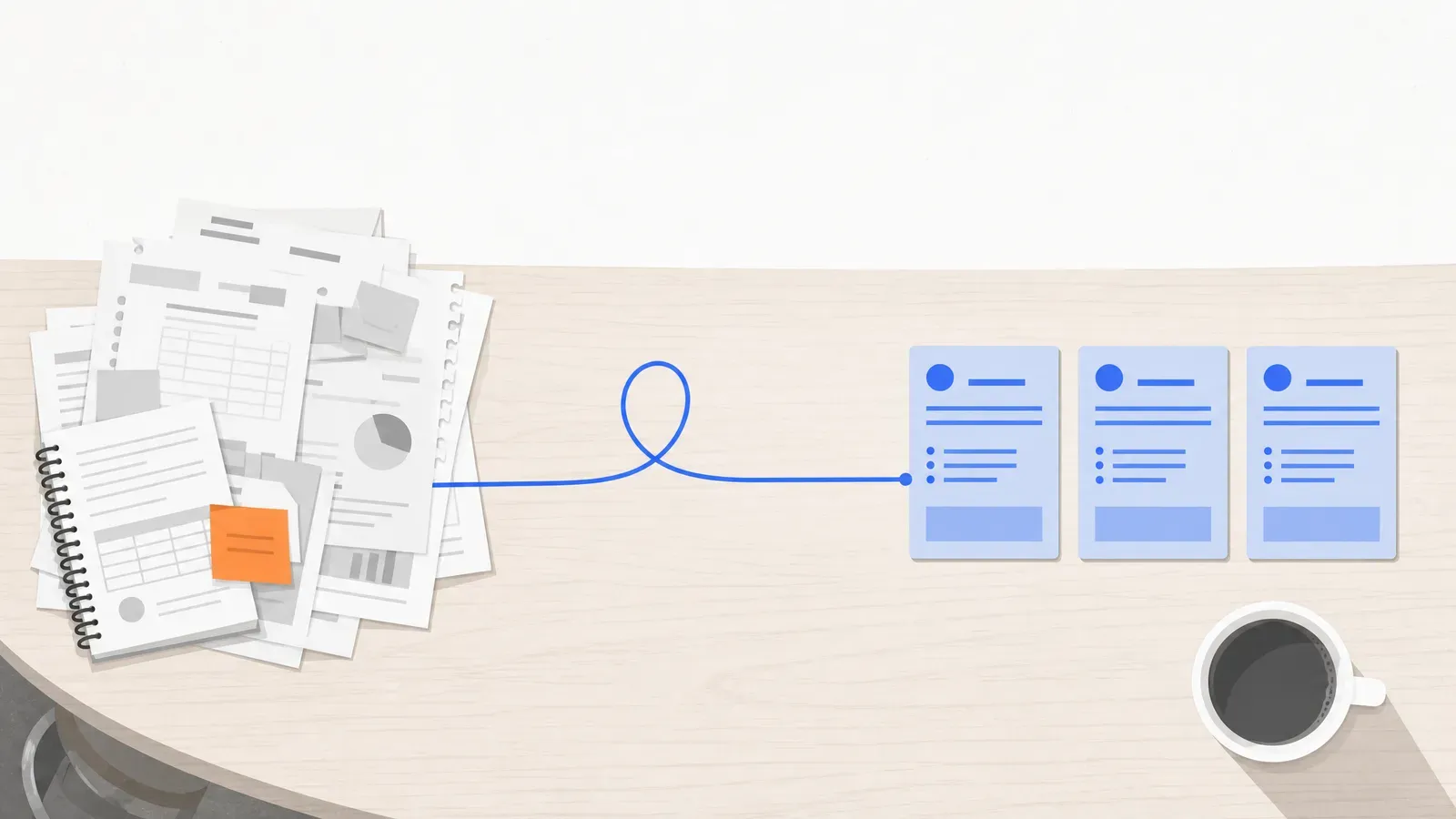
In short: AI automation is software that can understand messy human input - a phone call, a half-finished form, an email - make a simple judgement, and take an action, so a repetitive task gets done without a person doing it each time. For most Australian SMBs it pays back fastest on answering the phone, on admin, and on chasing follow-ups; it doesn’t pay back yet on high-stakes judgement calls or work nobody understands.
“AI automation” gets thrown around like everyone already agrees on what it means, though - and most small business owners I talk to don’t. Here’s the plain version, without the hype.
How is this different from old-school automation?
Old-school automation only followed rigid rules - “if the form says X, send email Y.” AI automation copes with the fact that real customers never fill in the form the way you expected, because it understands messy input first and only then acts.
The “AI” part means it can deal with messy, human input: a phone call, an email, a form full of half-finished sentences. The “automation” part means once it understands, it does something - books the appointment, drafts the reply, updates the record, routes the call.
Where does AI automation pay back first?
For most SMBs it’s one of three unglamorous jobs: answering the phone, killing the admin backlog, or following up before a lead goes cold. After 32 years of watching where small businesses actually lose time and money, the pattern is boring and consistent:
- Answering the phone. Missed calls after hours and during the rush are lost revenue, full stop. An AI receptionist that answers, handles the routine stuff, and books or triages the rest is usually the single highest-return automation for an appointment-based business - see what one actually costs.
- The admin that drowns the owner. Chasing quotes, re-typing details from an email into your booking system, sending the same five replies over and over.
- Following up. The lead that went cold because nobody got back to them in time.
Notice what’s not on that list: replacing your team, “AI strategy”, or anything that sounds impressive in a boardroom. The wins are unglamorous.
Where does AI automation not pay back yet?
It doesn’t pay back yet on high-stakes judgement calls, work you do rarely, or processes nobody actually understands. I’d rather lose a sale than oversell this, so:
- Anything where a wrong answer is expensive and hard to catch. AI is confident even when it’s wrong. If a mistake costs you a client or breaches a rule, you need a human in the loop - not full autonomy.
- Work you do rarely. Automating a task you do twice a year is a hobby, not an investment.
- A process nobody actually understands. If your team can’t explain how something works, automating it just makes the confusion faster.
How should you think about it as an owner?
You don’t need to learn how any of this is built. You need to answer one question: where is repetitive work quietly costing me money?
That’s exactly what an AI Opportunity Audit is for - we map your business, find the two or three places automation genuinely pays back, and estimate the return before anyone builds anything. No roadmap, no build. AI4SMB is an Australian AI automation agency founded by Matt Pearce after 32 years running business IT, and this framework is what we bring to every audit call.
If the phone is your front door - and for most trades, clinics and appointment-based businesses it is - start by reading how an AI receptionist actually works when it’s wired into the phone system you already run.
AI automation isn’t magic and it isn’t a threat. It’s just software that finally handles the messy human stuff - used well, on the right tasks, by people who’ll be honest with you about the rest. We publish the honest results of exactly that philosophy, in public, on the experiment page.