
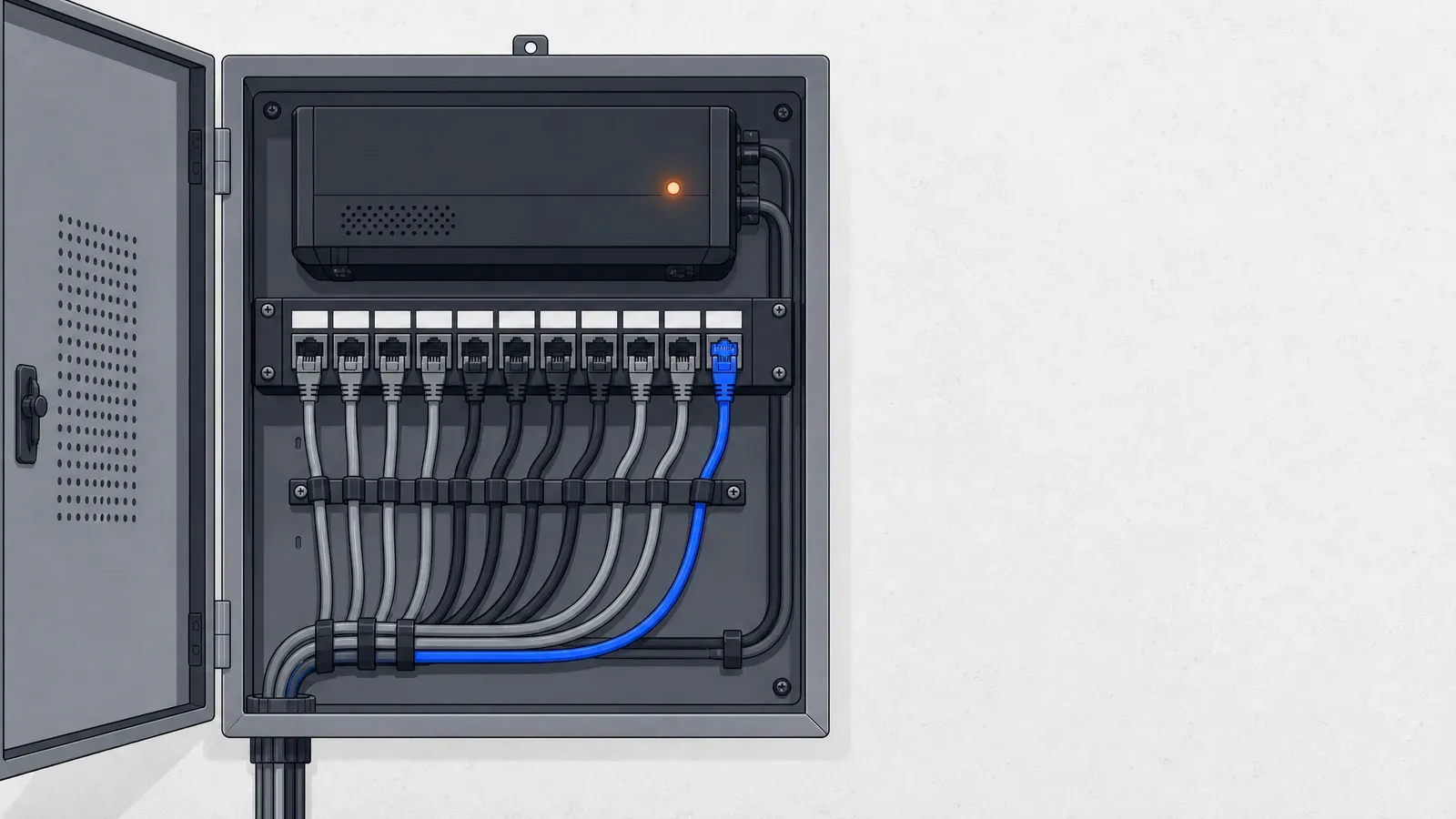
In short: no - you don’t need to rip out your phone system or get a new number to add an AI receptionist. It plugs into the PBX you already run (3CX, Yeastar, or any SIP/VoIP setup), so callers keep dialling your existing number and your team still answers when they’re available.
The most common worry I hear when someone’s considering an AI receptionist is some version of: “I don’t want to tear out the phone system we just got working.” Good - you shouldn’t have to. And with the way most AI receptionists are sold, that worry is completely justified, because a lot of them do effectively make you run a second, parallel phone setup instead. Here’s the difference, and why it’s the whole point of how we do it.
The widget approach: a new number and your problem
The quick way to sell an AI receptionist is to spin up a fresh phone number in the cloud, point the AI at it, and hand it over. Now it’s on you to forward your calls to that number, manage two systems, and hope the routing behaves.
That’s not integration. That’s a bolt-on with your existing infrastructure left sitting awkwardly beside it. It works in the demo. It gets messy in real operation - especially around after-hours rules, overflow, and transferring a caller back to a real person on your team.
The integration approach: your number, your PBX
We come at this from the other direction, because we’ve spent decades running business phone systems, not just AI.
Your business almost certainly already runs a PBX - the system that manages your phone lines and extensions. Common ones we work with are 3CX and Yeastar, but the principle holds across SIP/VoIP setups generally. The AI receptionist plugs into that. (Running 3CX specifically? There’s a dedicated page on how the AI wires into 3CX - routing, latency, native-AI trade-offs, the lot.)
Practically, that means:
- Callers keep dialling your existing number. Nothing on your business cards or Google listing changes.
- The AI picks up on your rules - after hours, on overflow when every line’s busy, or however you decide. Your team still answers when they’re available.
- Hand-off works properly. When a call needs a human, it transfers to the right extension on the system you already use, not off to some disconnected island.
Your callers never know the plumbing changed. That’s the goal.
Why is this the harder - and better - way?
Integrating into a live PBX is genuinely more work than spinning up a widget, because it means understanding telephony, respecting the setup that’s already carrying the business’s calls, and not breaking anything. That’s exactly why most AI-first companies don’t do it: they’re AI companies that discovered phones, not phone people who added AI.
AI4SMB is the second kind - an agency built by people who’ve run business phone systems for decades and added AI to it, not the reverse. The integration and the operations are the moat - the Australian voice matters, but it’s the part everyone can eventually buy. Wiring AI cleanly into the system you already run, and then operating it like infrastructure, is the harder and more valuable half.
What does this mean for you?
You don’t need to:
- Buy a new phone system.
- Change your business number.
- Run two setups in parallel and pray.
You need someone who can look at what you already have and add the AI to it. That’s a five-minute conversation on an audit call - tell us what PBX you run and we’ll tell you honestly how it fits.
Or, if you want the full picture first, here’s how the AI receptionist works end-to-end.